
Good Intentions Don't Make a Reflex Into Thought
On the phrase we use to sound empathetic — and why it might be doing the opposite

One evening out with friends, we spotted a group of heavyset men. They gathered regularly, late at night, always in the same spot — a remote part of the city, expensive SUVs, quiet conversation, no visible reason to be there at that hour. I said what most people would only think.
A friend looked at me sideways: — Why would you think that? You don’t know their story.
Different conversation, different day. A man on a bicycle was riding through the city screaming at pedestrians — wishing them death, wishing them cancer. I said something again.
And again: — You don’t know their story. From someone else this time.
I could have written it off as coincidence. But when the same phrase shuts down two completely different conversations — it’s no longer an argument. It’s a pattern. And what started to interest me wasn’t the content of the phrase. It was its function.

Context as an Asymmetric Weapon
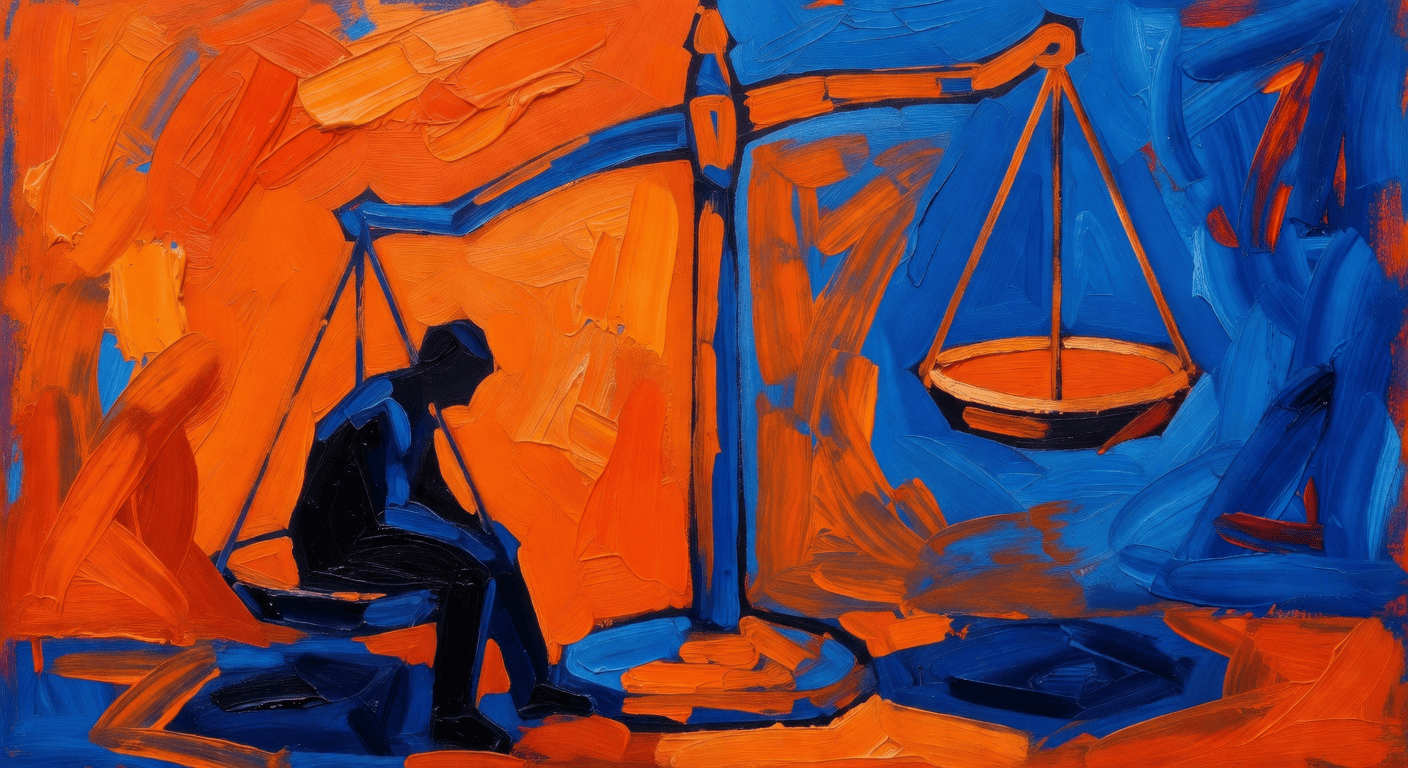
Try to remember — when did you last hear “you don’t know their story” said in defense of a victim?
Context is almost always demanded to justify deviant behavior. But nobody asks for context when it comes to your judgment — your caution, your instinct. Instead, your skepticism immediately becomes a bias.
Anything that looks like a principle but is applied selectively isn’t a principle. It’s a position.
There’s even a term for the opposite impulse: victim blaming. The logic of “she was asking for it” also invokes context — but against the victim. Both reflexes coexist in the same culture, simultaneously. And nobody particularly notices the contradiction.
Who Taught Us This
You could spend a long time blaming philosophy or politics. But there’s a simpler place to look — a bookshelf and a screen.
For decades, culture trained us to look for explanations for deviance. And called it empathy.
Tom Ripley in Patricia Highsmith — a cold-blooded killer and con man. Five books, because audiences kept demanding more. About a murderer. Meursault in Camus kills without remorse and almost without reason — and we still find ourselves on his side against the society that judges him. Amy Dunne in Gillian Flynn is a manipulator and killer, but her monologue became a feminist manifesto. Kevin in Lionel Shriver is a school shooter, narrated so intimately that you find yourself searching for his justification. And you find it. Then there’s the Joker in Todd Phillips’ film — where we genuinely empathize with a terrorist. With a difficult childhood, of course. Because context matters. Right?
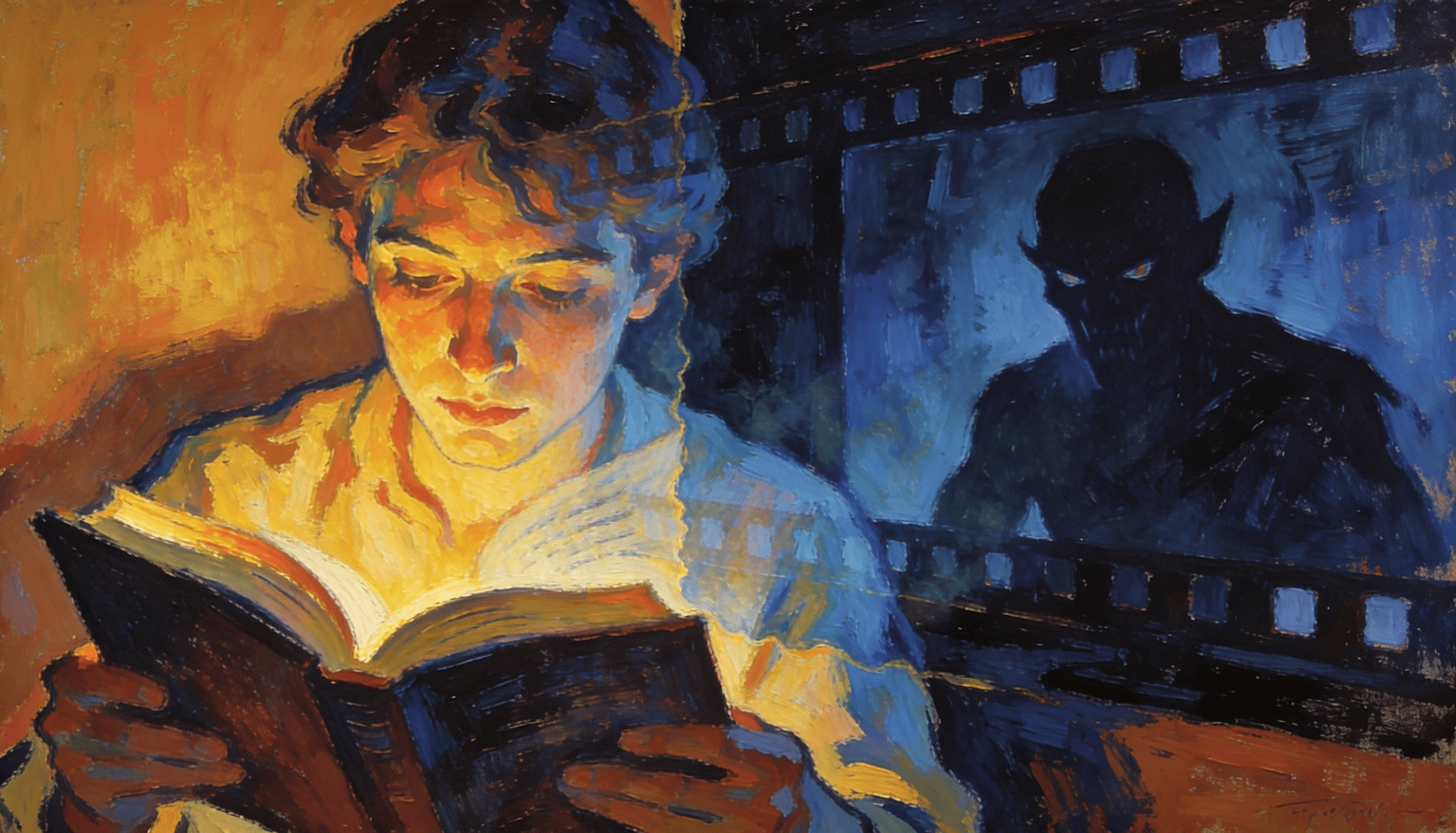
The mechanism is always the same: first-person narration or close point of view. The brain doesn’t distinguish between “I’m reading about someone” and “I’m inside someone.” Empathy activates automatically. The search for explanation quietly becomes the search for justification. And justification gets called depth.
Good Intentions as a Thinking Stop
Once, at a dinner with friends, I mentioned that I listened to a particular podcaster. The woman next to me rolled her eyes: — You listen to him? He’s an abuser.
I asked her to elaborate. She couldn’t. I started searching online — and found articles in the style of “someone heard, someone was told, no evidence, but rumors circulate.” More like an information attack than journalism.
But my counterargument never landed. Her brain read my doubt as a threat — not to the podcaster, but to her. A threat to an already-made decision, an already-occupied position.
Kahneman would call this System 1 — fast, automatic, energy-efficient. The brain chooses the quick answer not because it’s right, but because the right answer costs more.
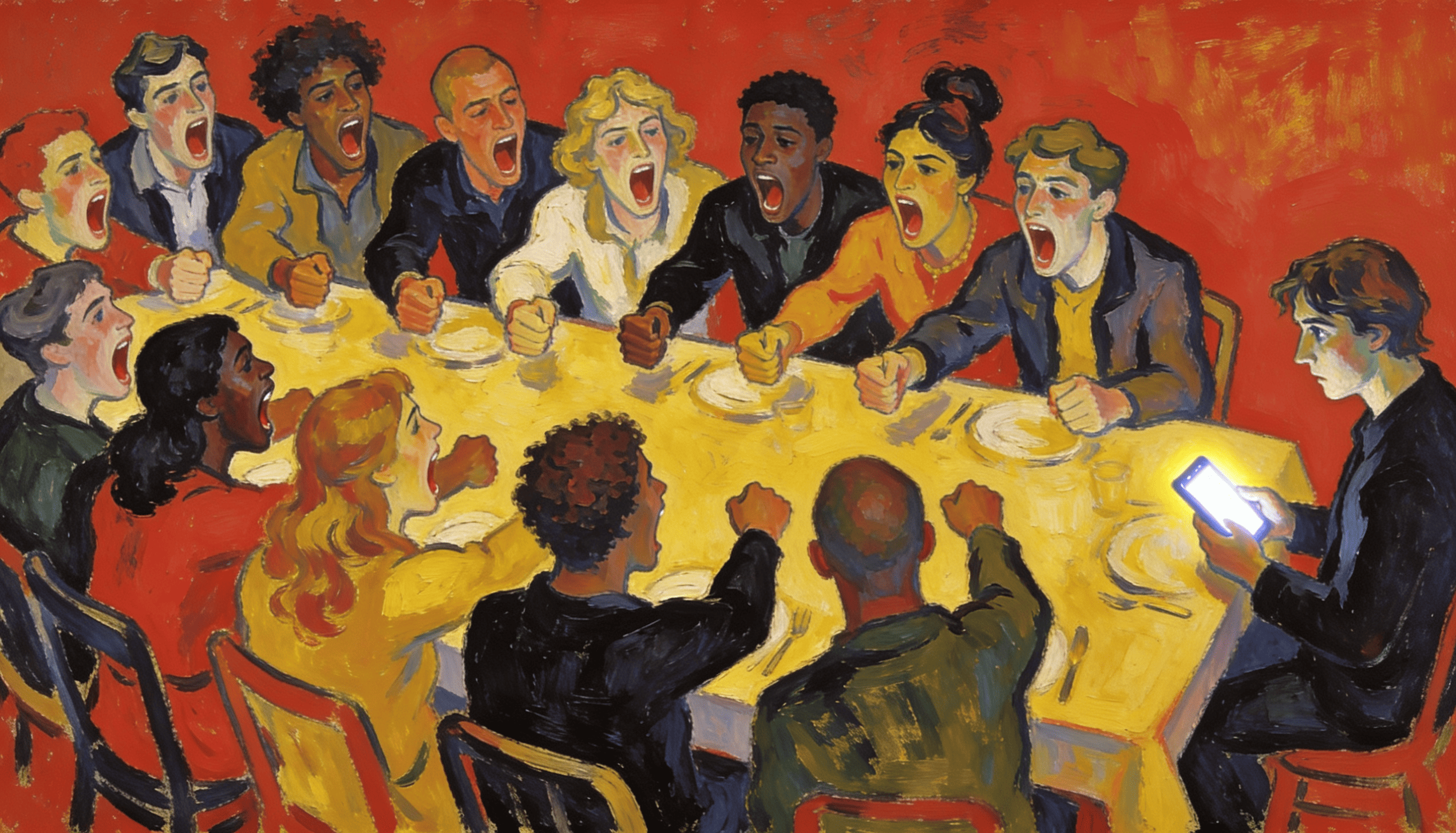
There’s another layer. I’ve heard variations of the same phrase from different people over the years: “We weren’t planning to visit [country with controversial leader], but we already bought the tickets a long time ago.” When you hear this as a cliché from different people — you understand: this isn’t an explanation. It’s a ritual. People say the right things so they don’t get cancelled. The brain has filed this pattern as safe.
During the Inquisition, you couldn’t question whether the women being burned were actually witches. If you questioned it — they’d throw stones at you too. Well. At least we’re capable of remarkable solidarity as a species.
Humanism as a Bandage
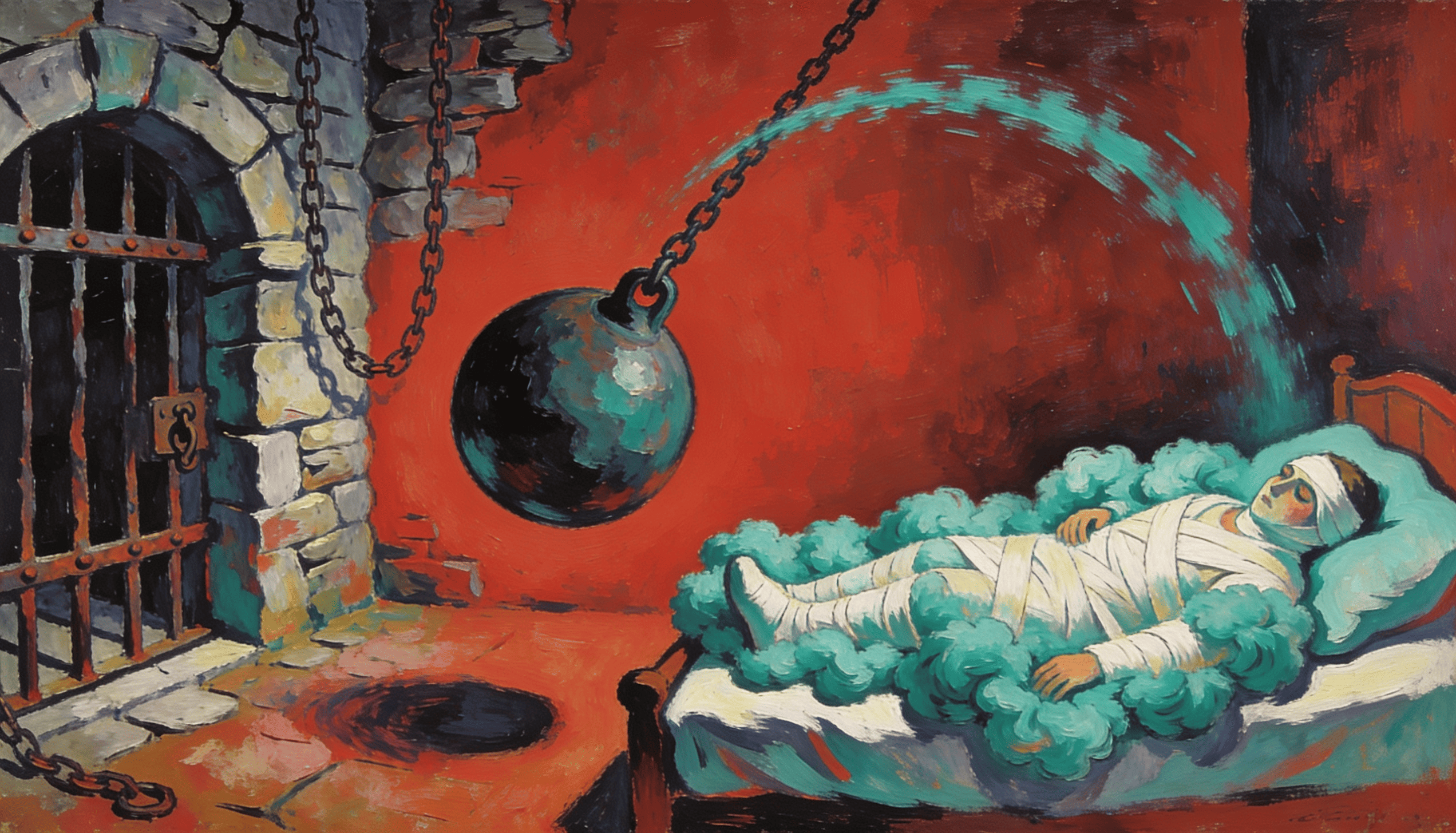
Humanism was born as a liberation from dogma. From the medieval logic where a person is guilty by default and deserves punishment. But the pendulum didn’t stop: from “punish without understanding” we moved to “understand without consequences.” And called it progress.
The idea was good. But as a species, we tend toward extremes. Now people, in complete earnest, empathize with those who are a genuine threat to society — shifting responsibility onto childhood, trauma, the system. Onto anything except the person themselves.
Social media made this faster. In a post-truth world, any argument can be met with “I’ve seen a different version” — from a different source, a different blogger. And the loudest truth becomes reality. The reflex now has infrastructure.
Good Intentions Don’t Make a Reflex Into Thought
Here I need to pause and ask myself a question. This article could be accused of the same thing: I’m drawing conclusions about people who say “you don’t know their story” — without knowing their story.
But there’s an important distinction. Presumption of innocence isn’t a strategy for everyday thinking. It’s a legal principle, designed to protect individuals from the power of the state in a courtroom. It was never designed to govern how you assess risk at ten o’clock at night in an isolated neighborhood.
Type one error: I decide they’re dangerous — and I’m wrong. Cost: I crossed the street for nothing. Type two error: I decide everything is fine — and I’m wrong. Cost: different. And more serious.
Evolution built our brains with this asymmetry in mind. “You don’t know their story” ignores it — and calls that wisdom.
The person who says this phrase is often sincere. They’re not a hypocrite. They genuinely believe they’re thinking critically, resisting surface-level judgment.
But if your reflex protects the offender and mine notices the threat — what makes your reflex better than mine? Both are automatic. Both are sincere. But one is socially approved, and the other isn’t.
Who decided that, and when — that’s a separate question. But as long as we don’t ask it, we’re not thinking. We’re just replaying rehearsed answers with the feeling that we’re having a conversation.
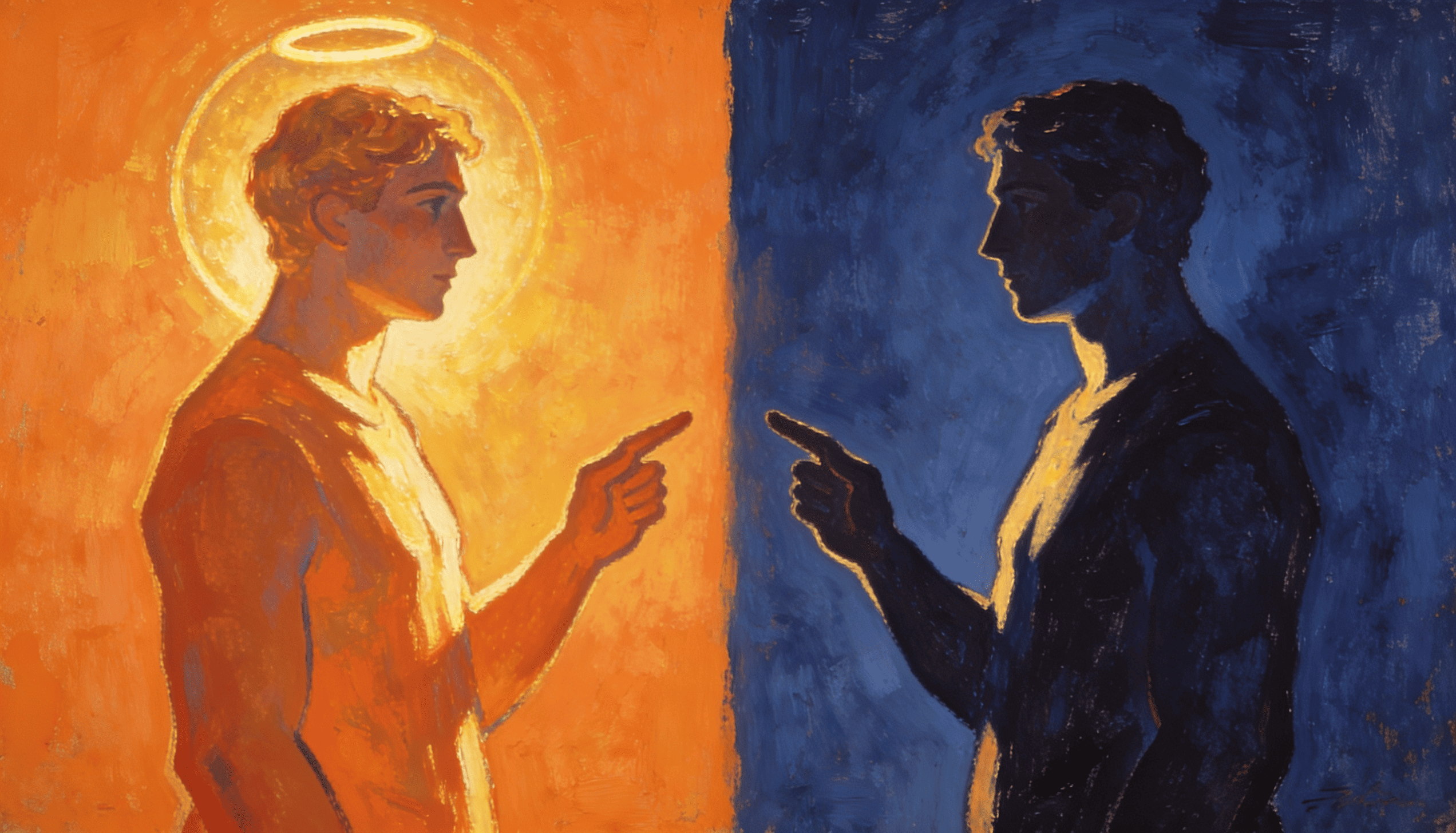
How to Recognize When Discussion Has Disappeared
A few simple signals. Not theory — just questions worth asking yourself.
First: can I articulate the strongest argument against my own position? If not — I’m probably not thinking. I’m defending.
Second: do I apply this principle symmetrically? To everyone — or only to those I’ve already decided to protect?
Third: what do I say when no one is listening? If alone with myself my view is different — that’s not a conviction. That’s a performance.
Fourth: do I feel irritated by the question itself — before I’ve even heard the answer? Irritation at the question is almost always a sign that the answer is already closed.
This isn’t a guarantee of being right. But it’s the difference between a person who thinks and a person who reproduces.

What Happens Next — History Knows
When these signals become collective — when an entire society stops asking certain questions — this isn’t just an intellectual problem. It’s a precondition for catastrophe.
Mao’s Cultural Revolution in China built a system where any doubt about the party line meant a “struggle session” — public humiliation, or worse. Millions of people publicly supported what they privately didn’t believe. The questions disappeared. So did millions of people.
Rwanda, 1994. Radio Mille Collines broadcast a narrative for months — clear, simple, question-free. Those who doubted stayed silent, because doubting was dangerous. In one hundred days, approximately eight hundred thousand people were killed.
The Salem witch trials of 1692 — when one girl accused a neighbor, the mechanism ran itself. Asking “where’s the evidence?” implied conspiracy with the devil. Nineteen people were hanged. The questions returned — when it was already too late.
The pattern is the same everywhere. First, certain questions become uncomfortable. Then dangerous. Then unthinkable. And at that point, society no longer controls itself — it is controlled by the narrative.
“You don’t know their story” isn’t the beginning of that road. But it is its logic in miniature: stop the question, protect the position, call it virtue.
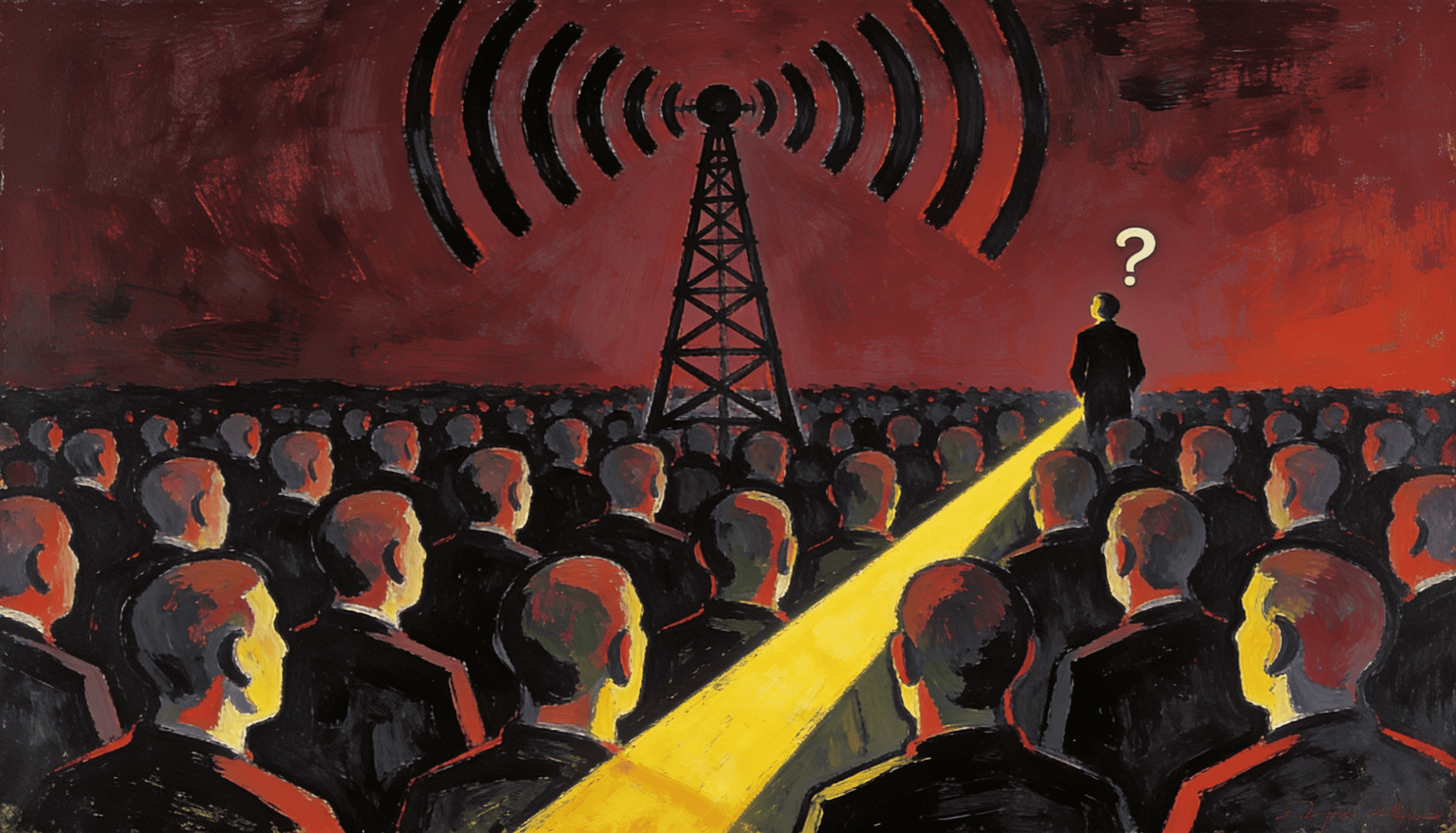
When exactly does a good intention become an excuse not to think — and is there a way to notice it from the inside?
REFERENCES
Kahneman, Daniel — Thinking, Fast and Slow (2011) — System 1 vs System 2 thinking
Highsmith, Patricia — The Talented Mr. Ripley (1955)
Camus, Albert — The Stranger (1942)
Flynn, Gillian — Gone Girl (2012)
Shriver, Lionel — We Need to Talk About Kevin (2003)
Phillips, Todd (dir.) — Joker (2019)
Haidt, Jonathan — The Righteous Mind (2012) — moral intuition precedes reasoning
Des Forges, Alison — Leave None to Tell the Story (1999) — Human Rights Watch report on Rwanda genocide and Radio Mille Collines
Boyer, Paul — Salem Possessed (1974) — Salem witch trials historical record
MacFarquhar, Roderick — The Origins of the Cultural Revolution (1974) — Mao’s struggle sessions
Blackstone, William — Commentaries on the Laws of England (1769) — origin of presumption of innocence as legal doctrine
The brain doesn’t fear
bad ideas.
It fears ideas
that rearrange the map.
Bravo. Again, you touch on a subject many refuse to take on board.
Why have we, as a species, vilified discernment to such a degree that when one witnesses an act, perceives a pattern, or arrives at an intuitive conclusion, he is accused of “not knowing the full story,” or worse, “victim blaming”?
It is not wisdom to distrust one’s intuition and senses so completely that we rush to defend individuals, movements, or institutions that are clearly in the wrong. In many cases, “you do not know the full story” is irrelevant to what has been witnessed in the moment.
Of course, context matters. But context should not become a cloak for avoiding judgment altogether. Past trauma, childhood experience, and suffering may explain certain patterns, but after a point, one remains responsible for his choices and actions and should be judged accordingly.
To say that we should not use intuition in judgment is foolish, and often dangerous. Would it be wise to walk down an alley at 2 a.m. and refuse to judge the situation or the characters encountered when one’s intuition is sounding the alarm? Discernment exists for a reason. It is not cruelty. It is protection.
The media has played a role in weakening this faculty, often through stories that encourage sympathy for the villain while obscuring the reality of the harm being done. Religion, too, particularly Christianity in the West, has often been reduced to “judge not lest ye be judged,” while ignoring the deeper requirement to discern rightly.
It is proper to judge a person, act, or situation according to what has been witnessed, sensed, and perceived. Intuition may not always be easy to articulate, but that does not make it false. More often than not, the body sees before the mind can explain.